
Youth-Centered Mobility Justice Pilot Program
A collaboration between Biking While Black and Los Angeles Bicycle Academy to support the next generation of mobility justice leaders

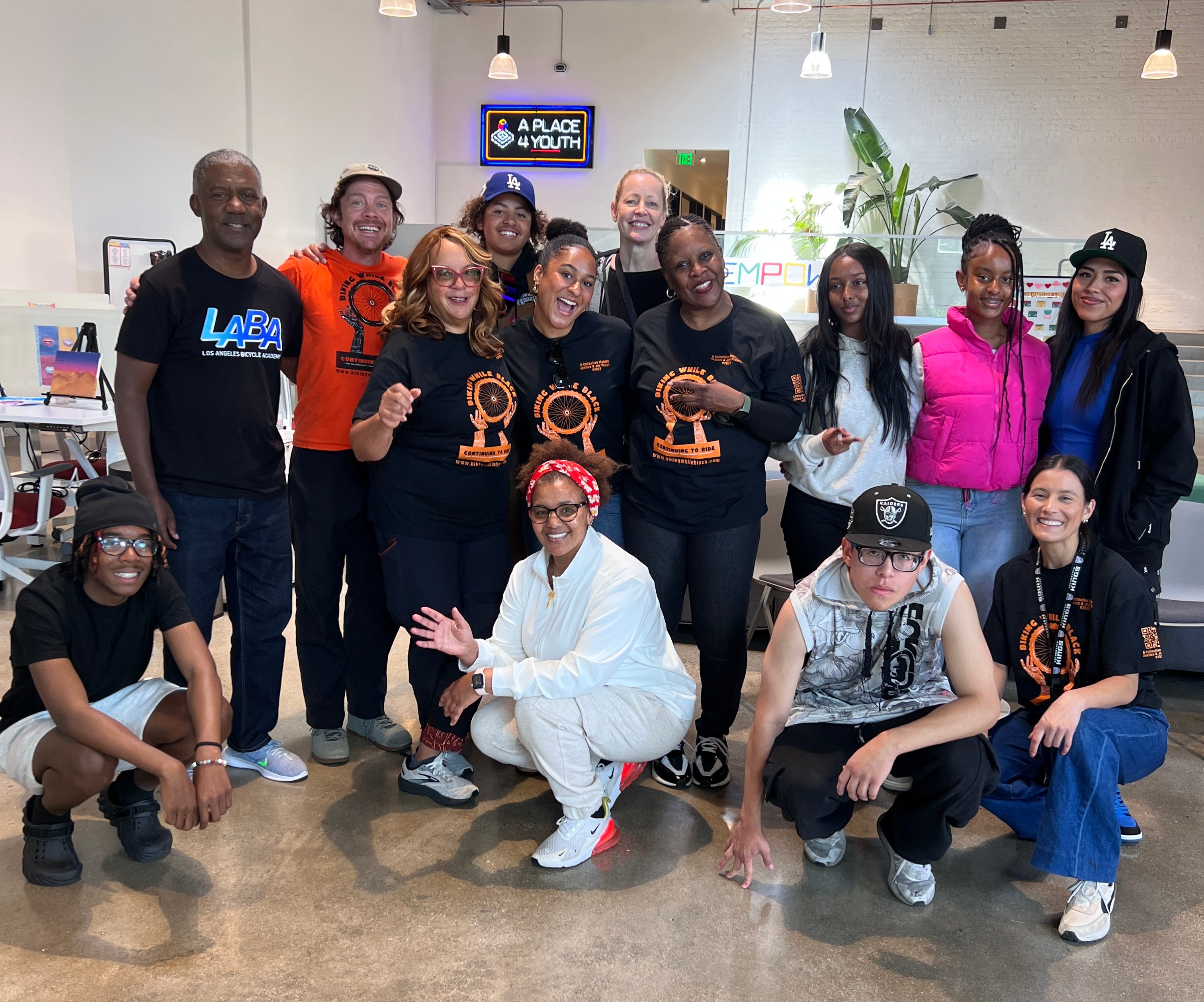
One thing we know to be true is that Black and Brown people in our communities aren’t afforded the same privilege of mobility as White residents. While we tend to focus on the experience of adults or the general population of Black and Brown residents, we also need to think about how this affects youth of color. Young Black and Brown residents grow up with limited mobility in their cities and we want to help give them the tools to change that.
Thus, in partnership with the Los Angeles Bicycle Academy (LABA), we at Biking While Black are working to empower Black and Brown youth to advocate for their right to autonomy through a collaboratively produced Youth-Centered Mobility Justice Pilot Program launching this Spring.
But before we get into our goals for this program, let’s talk about why it’s necessary.
Traffic Violence’s Effect on Youth
Traffic violence disproportionately affects Black and Brown residents and communities. In a policy brief published with Carlin Coleman and Sarah Rebolloso McCullough from UC Davis, we noted that Black residents represented 17% of traffic collision victims and 21% of traffic fatalities despite making up only 8% of the city’s population. And of the most dangerous streets in the city (6% of the network) are concentrated in Black and Latino neighborhoods making up 70% of the most dangerous corridors. And on top of that, Black and Brown neighborhoods are more highly policed posing the threat that youth in those communities are much more likely to encounter law “enforcement just going about their daily lives. Additionally, traffic enforcement doesn’t’ help Black and Brown communities–in fact, we note in the brief that while enforcement disproportionately affects Black and Brown riders, it does not demonstrate real safety benefits. In short: it does more harm than good.
Our good friend and colleague, Charles T. Brown, calls this arrested mobility. The mobility of the people in Black neighborhoods is arrested because of the bad roads and overpolicing (you can read more about it in his book published last year, Arrested Mobility: Overcoming the Threat to Black Movement).
The 2026 RIPA Report confirms that youth of color, particularly Black and Hispanic/Latin(x) youth, are disproportionately racially profiled and stopped by law enforcement. Data reveals profound disparities in stops, searches, and use of force against youth aged 12–24, with Black youth facing significantly higher rates of force. When our youth cannot walk, bicycle, or exist freely without fear of being targeted, it is a direct violation of their dignity, autonomy, and civil rights. We cannot accept systems that surveil and control Black lives instead of protecting them. Our youth deserve the freedom to move through their neighborhoods without being treated as suspects in their own existence.
It’s clear that when it comes to our streets being safe for youth, it is not living up to its promise of “justice and liberty for all” paired with historically to the current day not investing in our neighborhoods with predominately Black and Brown populations. This has led to disenfranchised streets and overall infrastructures. Our goal on this project is to address these realities with restorative engagement and mobility justice education for young people in our community.


Youth-Centered Mobility Justice Academy
To help address these disparities and get our Black and Brown youth involved in advocating for solutions, we’re launching a partnership to empower the next generation of bicyclists and mobility justice advocates! In partnership with LABA, we’ll invite 15 young Black and Brown cyclists to participate in a six-month mobility justice and bicycling education program.
We will meet twice each month through a specialized mobility justice program designed to deepen and expand upon the Los Angeles Bicycle Academy’s restorative approach to bicycle education, safety, and community stewardship.
This marks an important evolution in our collective work. We are honored to launch this pilot and to join alongside our first cohort of emerging youth mobility justice leaders—supporting their growth as bicyclists, advocates, and voices within their own communities. Stay tuned as we formally introduce the program framework, curriculum, and the unfolding journey of the youth participating in this inaugural cohort.
Our hope for this program is to see these young people involved in reimagining how their neighborhood spaces can better support their autonomy to bicycle, walk, and live out their lives.